Stop Leads Going Cold: A Simple Follow-Up System for Small Sales Teams
Many enquiries are lost not on price but to scattered records, unclear ownership and forgotten follow-ups. Here is a simple system any small sales team can run.
A customer sees your ad, calls your clinic, messages your real estate office on WhatsApp or fills the form on your website. Someone says "we will get back to you", notes the number somewhere, and the day gets busy. When someone finally calls back three days later, the customer has already booked with another clinic or bought a flat elsewhere. You paid for that enquiry, and it went cold without anyone saying no.
Many small businesses do not have a lead problem so much as a follow-up problem. This guide explains why leads go cold and how a small sales team, whatever channels its enquiries come from, can build a simple system: one list for every lead, a clear owner and response time, a fixed follow-up schedule and a few daily habits.
Why good leads go cold
Leads rarely disappear only because your price was too high. They usually slip away through small, ordinary gaps in how enquiries are handled.
To see what a lost lead costs, divide last month's ad spend in rupees by the number of enquiries it brought. Multiply that cost per enquiry by the enquiries that never got a second call, and you see what forgotten follow-ups cost you.
- Leads are scattered. Some arrive on the owner's personal WhatsApp, some on the landline, some on Instagram and some through a website form nobody checks.
- Nobody owns the lead. Everyone assumes someone else replied, so no one does.
- The first reply is slow. Customers often enquire at several places, and a prompt, helpful reply usually wins the conversation.
- Follow-up stops after one try. One unanswered call and the lead is dropped, even though the customer was just busy.
- No record of the conversation. When the customer calls back, staff do not know what was discussed or promised.
- No clear next step. The call ends with "okay, let me know" instead of a fixed date for the next contact.
Step one: capture every lead in one place
The foundation is a single list where every enquiry lands, whatever the source. You cannot follow up with leads you cannot see.
This can be a shared online spreadsheet, a simple CRM (customer relationship management) tool or a custom system. For a team just starting, a well-organised spreadsheet is often enough. What matters is that every enquiry from every channel is entered the same day, and this list is the only source of truth. Keep the columns few:
- Name and phone number, with the date and time of the enquiry
- Source, such as walk-in, phone, WhatsApp, website, Instagram, referral or a specific ad campaign
- What they want, for example a 2BHK flat, a root canal consultation, Class 6 admission or a party booking for 40 people
- Assigned to, the one person responsible for this lead
- Status, from a short fixed list like New, Contacted, Interested, Visit Booked, Won and Lost
- Next follow-up date, plus a one-line note on the last conversation
Step two: set a response time and measure it
A customer's interest is highest at the moment they enquire. A parent choosing a school or a family looking for a flat often compares several options that same week. Agree on a team target, for example replying within one hour during working hours, and to evening enquiries first thing next morning.
To see how much speed matters for your business, take your last 30 to 50 enquiries, note how long each waited for a first reply, and compare how many converted among those answered quickly versus late. Then keep tracking the gap between enquiry time and first contact; it is one of the most useful numbers in your list.
If you cannot answer fully yet, acknowledge the enquiry and say when you will call. An automatic reply can cover after-hours enquiries, as long as a real person follows up.
Step three: fix a follow-up schedule
Many customers do not respond to the first call. They may be driving, at work or not ready yet. A fixed schedule tells the team when to try again and when to stop. Adapt the gaps to how long people take to decide: a restaurant booking is decided in a day, while a flat purchase or school admission can take weeks.
Every conversation should end with a next step and a date, entered straight into the list. "I will call you on Thursday after you discuss it with your family" beats "let me know".
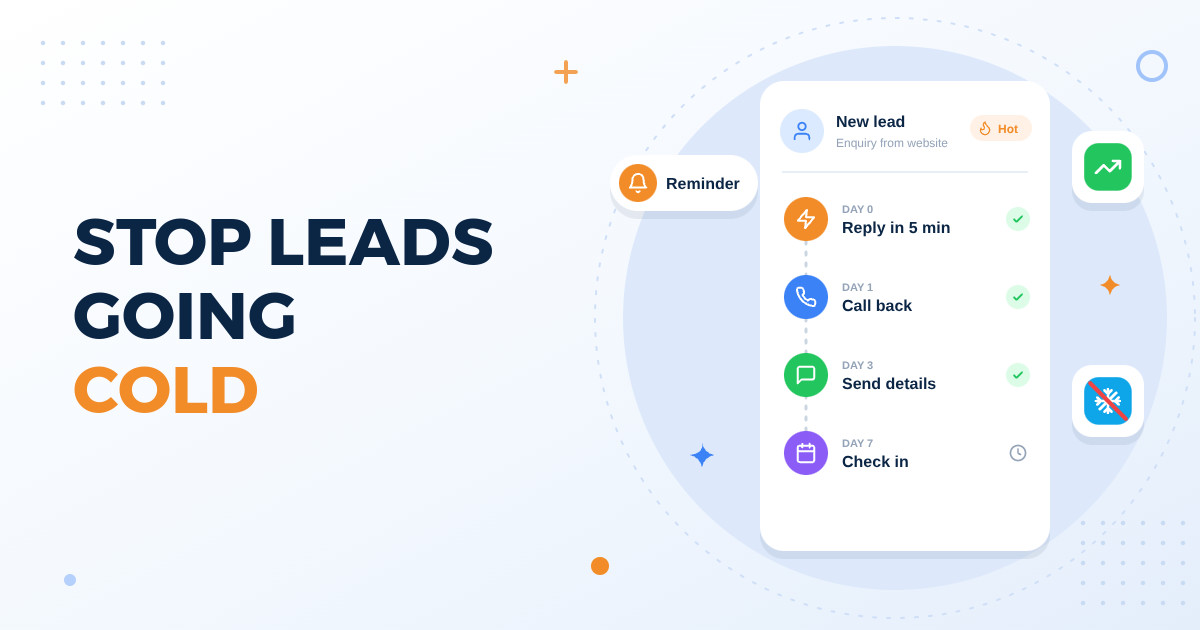
- Same day: reply within your target time by call, then send a WhatsApp message with the details they asked for
- Day 1: if there was no answer, call again at a different time of day
- Day 3: share something useful, such as a price sheet, brochure, photos, a site visit slot or the fee structure
- Day 7: a short check-in asking if they have questions or would like to visit
- Day 14 to 30: a final message saying you will close the enquiry for now, but they can reach you any time
- After that: move the lead to a monthly or festival-season list instead of deleting it
Simple CRM habits that keep the system alive
Software alone does not fix follow-up. The system works only when the team builds a few habits around it and the owner or manager checks them regularly.
- Start the day with the follow-up list. Each person clears the leads due today before anything else.
- Update right after every call. A note made two hours later is usually incomplete.
- Never leave a lead without a next date. Every open lead needs a follow-up date, or is marked Won or Lost.
- Record why a lead was lost. Price, location, timing or no response; over a few months, this shows you what to fix.
- Hold a short weekly review. Look at the week's leads, response times, overdue follow-ups and wins by source.
- Keep lead data on business accounts. If leads live on a salesperson's personal phone, they leave when that person leaves.
When to automate, and mistakes to avoid
Once the habits are in place, automation can take over repetitive work. Website and ad forms can drop enquiries straight into your list, incoming leads can be assigned automatically, reminders can reach staff on WhatsApp or email, and brochures can go out without retyping. If the hours your team spends each month entering and chasing enquiries are significant, or leads still slip through, automation deserves a look.
Either way, avoid a few common mistakes.
- Buying a complex CRM before the basics are clear. If the team ignores a simple spreadsheet, they will ignore a complicated tool too.
- Automated messages that sound robotic. Templates help, but customers still want a real conversation.
- Following up too often, or after a clear no. Stick to the schedule, and if someone says they are not interested, thank them, mark the lead Lost and stop.
- Tracking too many fields. If entering a lead takes five minutes, staff will skip it.
Leads usually go cold quietly, through scattered enquiries, slow replies and follow-ups nobody owns. A shared list, a response target, a fixed schedule and a few daily habits close most of those gaps. Start this week: gather every lead into one place, give each an owner and set a next follow-up date for every open enquiry.
If you would like help building a follow-up system that fits how your team works, from automated reminders to a custom CRM, Knight21 can help. With our small, senior teams, the person who understands your problem is the one who builds the solution. Have a friendly chat with us at knight21.in/contact.